

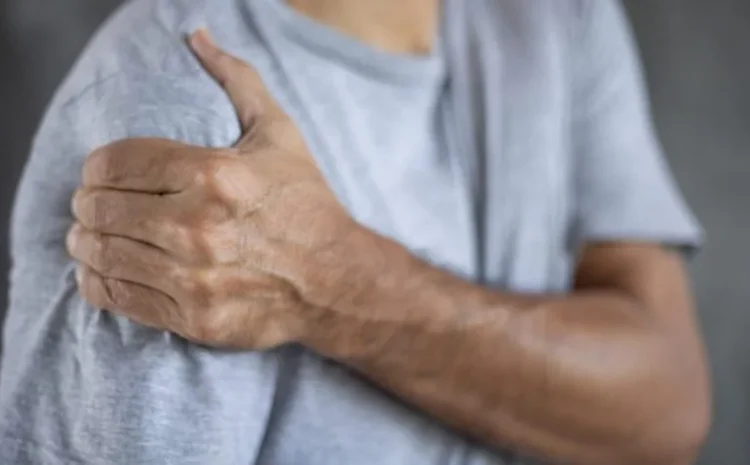
ARTHROKINETIC THERAPY FOR ROTATOR CUFF INJURY
Arthrokinetic biomechanics plays a crucial role in understanding and addressing rotator cuff injuries. Here’s a comprehensive overview:
Biomechanical Considerations:
- Glenohumeral joint kinematics: Movement patterns of the shoulder joint.
- Rotator cuff muscle function: Supraspinatus, infraspinatus, teres minor, and subscapularis.
- Scapular movement: Upslope, downslope, and rotational movements.
- Force distribution: Compression, tension, and shear forces.
Arthrokinetic Therapy Goals:
- Restore rotator cuff muscle function.
- Improve glenohumeral joint mobility.
- Enhance scapular stability.
- Optimize force distribution.
Arthrokinetic Techniques:
Phase 1 (Pain Relief and Mobility):
- Glenohumeral joint mobilization: Gentle, graded mobilizations.
- Soft tissue mobilization: Addressing surrounding muscles and ligaments.
- Active-assisted movements: Patient-assisted movements.
- Pendulum exercises: Gentle, active-assisted movements.
Phase 2 (Strengthening and Stability):
- Rotator cuff strengthening: Focus on supraspinatus, infraspinatus, and teres minor.
- Scapular stabilization exercises: Serratus anterior and trapezius strengthening.
- Proprioceptive training: Joint repositioning sense and movement sense exercises.
- Progressive resistance exercises: Gradually increasing resistance.
Phase 3 (Functional Restoration):
- Functional activities: Incorporate daily activities (e.g., reaching, lifting).
- Dynamic movement training: Emphasize movement patterns (e.g., throwing).
- Agility and proprioception training: Reactivity and quick changes of direction.
- Return to sport-specific activities.
